The Surprising Reason Your Home LED Device Isn't Delivering Results
Home LED Device Efficacy is not simply a matter of buying a device with impressive specifications and switching it on whenever you remember. If your at-home LED light therapy routine is producing little visible change, the surprising explanation may be that your device, schedule, technique, and expectations are not working together. Even a well-designed device can deliver disappointing results when one important part of the routine is overlooked.
The good news is that a lack of noticeable progress does not automatically mean that LED light therapy is useless or that you need another device. Before spending more money, it makes sense to identify what is actually preventing your current routine from working as intended.
- Consistency: Irregular sessions make it difficult to evaluate a routine.
- Correct use: Distance, positioning, treatment duration, and device instructions matter.
- Appropriate expectations: LED treatments are not instant cosmetic transformations.
- Device suitability: Wavelength, intended use, and actual product specifications deserve attention.
- Skin routine: Irritation and competing skincare products can complicate your results.
1. The Biggest Overlooked Problem: Your Routine Is Inconsistent
One of the easiest mistakes to make with home LED therapy is treating it as an occasional beauty treatment instead of a routine that requires consistency. A person might use a facial LED mask several times during the first week, forget about it for the next two weeks, and then expect a noticeable improvement after one additional session.
That approach makes it difficult to determine whether the device is providing any benefit. It also makes comparisons unreliable because there is no consistent treatment pattern to evaluate.
LED light therapy is generally discussed as a repeated, noninvasive approach to skin care. Different devices and treatment goals have different recommended schedules, so there is no universal number of sessions that applies to every product.
Build a realistic schedule rather than an ambitious one
Start by reading the manufacturer's instructions and choosing a schedule that fits comfortably into your week. If the device specifies three sessions weekly, for example, plan those sessions in advance instead of trying to compensate with longer treatments whenever you remember.
Pairing LED use with an existing habit can make the routine easier to maintain. You might schedule a session after your evening cleansing routine or at another consistent time when your skin is clean and you can comfortably follow the instructions.
2. The Light Itself May Not Match Your Skin Goals
Not all LED devices use the same wavelengths, and not all colors of light are intended to address the same concerns. A device marketed as a general facial rejuvenation tool may not be designed for the particular skin concern you want to improve.
Red and near-infrared light are commonly associated with photobiomodulation research and are used in some consumer devices intended for skin appearance and related cosmetic goals. Blue light is commonly used in devices designed for acne-related applications. These categories are not interchangeable.
For example, someone primarily concerned about occasional breakouts might purchase a device designed around red-light treatment and then wonder why it does not meet their expectations. The problem may be a mismatch between the treatment's intended application and the desired outcome.
Understand what the specifications actually mean
- Wavelength: Usually expressed in nanometers (nm), it identifies the wavelength of emitted light.
- Light output: Irradiance describes the power delivered over an area and is commonly expressed in mW/cm².
- Energy density: Fluence describes the energy delivered over an area, often expressed in J/cm².
- Treatment area: This indicates how much of the intended skin area receives light during use.
These measurements help explain why two devices that look almost identical can have different treatment characteristics. However, a higher numerical specification does not automatically mean better results. Appropriate output, exposure, design, and intended application all matter.
When comparing a home LED light therapy device with another product, focus on whether its documented specifications match its stated purpose rather than relying on marketing language such as professional strength or advanced technology.
3. Your Treatment Technique Could Be Reducing the Benefit
A device can have suitable technology and still be used incorrectly. This is particularly important with handheld LED panels, because positioning can vary from one session to another.
Some devices are designed to rest directly against the face, while others require a specific distance between the light source and the skin. Changing that distance without considering the manufacturer's instructions can change the exposure delivered to the treatment area.
Check these four technique details
Positioning: Make sure the treatment area is aligned with the device's intended coverage. A panel held too far away or angled inconsistently may expose different areas during each session.
Contact and fit: If you use a facial LED mask, check that it sits as intended. Poor positioning can leave areas outside the effective treatment zone. Do not force a mask into an uncomfortable position to achieve closer contact.
Exposure time: Follow the specified session duration. Extending a treatment because you want faster results is not a reliable way to increase effectiveness.
Preparation: Begin with clean skin unless the manufacturer specifically instructs otherwise. Heavy makeup, residue, or unsuitable products can interfere with the intended treatment setup.
A useful distinction is that proper technique does not mean maximizing exposure. It means reproducing the conditions for which the device was designed.
4. More Treatment Does Not Automatically Mean Better Results
It is tempting to believe that longer sessions will produce faster improvements. This assumption is understandable because many people associate more time with more intensive skincare. LED treatments, however, should not be approached that way.
Light-based treatments have parameters that include wavelength, irradiance, exposure duration, and treatment frequency. These factors interact, and the relationship between exposure and biological response is not necessarily linear.
In photobiomodulation research, the concept of a biphasic dose response is frequently discussed. Broadly, it means that a response may depend on the delivered dose, and increasing exposure indefinitely does not guarantee increasing benefit.
This is why following the manufacturer's treatment protocol is more sensible than improvising longer sessions or combining multiple devices in an attempt to accelerate progress.
Never exceed the recommended session duration or frequency unless a qualified professional and the device instructions establish an appropriate alternative. Stop using the device if you experience persistent discomfort, unusual redness, eye symptoms, or other concerning reactions. Follow eye-protection instructions carefully, particularly with devices that emit bright visible or near-infrared light.
5. Your Skincare Routine May Be Complicating the Process
Another frequently overlooked issue is what happens before and after an LED session. A home light therapy device does not operate independently of the rest of your skincare routine.
For instance, someone might use a strong exfoliating acid, apply a retinoid, and then immediately begin an LED session despite experiencing irritation. The resulting discomfort could be incorrectly attributed to the LED device itself.
It is important to distinguish between a treatment that is not producing the desired cosmetic effect and a skincare routine that is making the skin uncomfortable.
Keep preparation simple
- Cleanse gently before treatment when the device instructions recommend clean, bare skin.
- Avoid experimenting with several new active skincare products at the same time.
- Pay attention to irritation, dryness, or unusual sensitivity.
- Use a moisturizer and daytime sun protection as appropriate for your regular skincare routine.
- Check whether the device manufacturer provides specific guidance about products that should not be used before treatment.
There is no reason to assume every active ingredient is automatically incompatible with LED light. The more practical approach is to follow the device-specific guidance, consider your skin's tolerance, and avoid introducing multiple variables simultaneously.
6. A Quick Comparison: What Might Be Going Wrong?
Before changing your device or spending money on additional skincare products, compare your experience with the patterns below. The objective is to identify the most likely issue and make one meaningful adjustment at a time.
This comparison is a troubleshooting framework, not a diagnostic tool. Several factors can contribute to the same experience, so avoid assuming that one symptom proves a particular device problem.
7. Your Expectations May Be Outrunning the Evidence
Sometimes the surprising reason a home LED device seems ineffective is not a technical defect. It is the expectation that a light-based skincare tool should produce dramatic changes in a short period.
LED light therapy is an area of ongoing research, and findings from controlled studies do not automatically translate into identical results for every consumer device or every individual. Clinical equipment, treatment protocols, and home-use products can differ substantially.
It is also important to separate cosmetic improvements from medical outcomes. A device promoted for smoother-looking skin should not be assumed to erase deep wrinkles, eliminate every breakout, reverse sun damage, or replace treatment for a skin condition.
Use a fair way to evaluate progress
Take photographs before starting a routine and repeat them periodically. Use similar lighting, camera distance, facial expression, and time of day. Avoid comparing a photograph taken in bright natural light with one taken under warm indoor lighting.
Record your treatment dates and any noticeable changes in skin comfort or appearance. This creates a more useful record than relying on memory or checking your reflection several times a day.
Also consider the possibility that the improvement you want is outside the device's realistic capabilities. If your main concern is deep wrinkles, significant pigmentation, persistent acne, or a changing skin lesion, a home LED device may not be the appropriate primary solution.
- If your routine has been inconsistent, address scheduling first.
- If your schedule is consistent but the device's specifications are unclear, verify the technical details.
- If your device is suitable and correctly used but progress remains limited, reconsider whether the desired outcome is realistic for home LED treatment.
- If the concern is persistent or medically significant, seek professional advice rather than simply increasing treatment exposure.
8. What to Do Now: A Simple LED Troubleshooting Checklist
Instead of changing everything at once, work through this checklist in order. The sequence prioritizes simple, low-cost corrections before considering a different approach.
- Confirm the device's intended use and treatment claims.
- Identify the documented wavelengths and relevant output specifications.
- Read the complete instructions for treatment duration and frequency.
- Check that the device fits or is positioned correctly.
- Prepare your skin according to the manufacturer's directions.
- Use the device on a consistent schedule without exceeding its protocol.
- Check charging, power supply, cleanliness, and visible damage.
- Keep a simple record of sessions and skin observations.
- Take comparison photographs under consistent conditions.
- Review progress without expecting immediate or guaranteed results.
Try a controlled adjustment instead of a complete reset
If you have identified a likely problem, change one variable at a time. For example, if you were using the device irregularly, correct the schedule without simultaneously changing your skincare products and treatment duration.
If the issue appears to be poor positioning, follow the fitting instructions and keep other aspects of your routine stable. If the product specifications do not support your intended treatment goal, no amount of schedule optimization can correct that mismatch.
This approach is valuable because it separates problems that can be fixed through better habits from limitations that require a different treatment strategy.
9. When a Home LED Device Is Not the Right Solution
Not every skin concern is appropriate for home light therapy. Although LED devices may be useful as part of a cosmetic routine for certain goals, they should not be treated as universal skincare solutions.
People with photosensitivity, certain medical conditions, or medications that increase sensitivity to light should seek appropriate medical advice before using an LED device. The same caution applies to individuals with eye conditions or a history that makes light exposure a particular concern.
Persistent acne, unexplained pigmentation, painful inflammation, rapidly changing skin marks, and other unusual skin changes deserve proper evaluation. A beauty device should never delay an assessment when a medical issue is possible.
There is also a practical limitation worth considering: if a device requires a schedule that you cannot realistically maintain, it may not be a useful addition to your everyday routine, even if its technology is legitimate.
Use only devices intended for their stated application. Follow all eye-safety requirements, inspect equipment before use, and do not use damaged devices. If treatment causes persistent redness, pain, visual disturbances, or another unusual reaction, discontinue use and seek appropriate professional advice. Manufacturer instructions and qualified medical guidance take priority over online skincare tips.
10. Frequently Asked Questions About Home LED Device Efficacy
1. How long does it take for a home LED device to show results?
There is no universal timeline. It depends on the device, wavelength, intended application, treatment protocol, and individual response. Some cosmetic studies evaluate changes over multiple weeks, but their findings should not be interpreted as a guaranteed timeline for every home device. Follow the manufacturer's schedule and evaluate progress consistently.
2. Can I use my LED facial mask every day?
Only if the specific manufacturer instructions explicitly recommend daily use. Some devices have schedules that involve fewer sessions per week. More frequent treatment is not automatically more effective, and exceeding the recommended exposure may increase the risk of discomfort or other unwanted effects.
3. Why does my LED mask light up but seem ineffective?
A glowing device only confirms that it is emitting visible light. It does not establish that its wavelength, output, coverage, or treatment duration is appropriate for your intended goal. Check the specifications, positioning, operating condition, and manufacturer's intended application.
4. Is red light better than blue light for skincare?
Neither is universally better. Red light and blue light have different applications and research contexts. Red light is commonly associated with photobiomodulation and certain cosmetic goals, while blue light is used in some acne-focused devices. Choose the treatment approach based on the actual skin concern and the device's documented purpose.
5. Should I apply skincare products before using an LED device?
That depends on the product instructions. Many consumer facial LED devices recommend starting with clean, dry skin. Certain formulas or thick product layers may be unsuitable for use during treatment. Check the manufacturer's guidance rather than assuming that every serum or moisturizer is compatible.
6. Can I combine LED therapy with retinol or exfoliating acids?
Some people incorporate LED treatments into broader skincare routines, but compatibility depends on the product, skin tolerance, and device instructions. If retinol or exfoliating acids are causing dryness or irritation, simplify the routine and avoid experimenting with several treatments simultaneously. Ask a dermatologist if you are uncertain about combining treatments.
7. Does a more expensive LED device guarantee better results?
No. Price alone does not establish treatment effectiveness. Relevant factors include wavelength, output, coverage, safety features, quality of construction, and the reliability of the product's documentation. An expensive device can still be unsuitable for a particular skincare goal.
8. What should I do if I have followed the instructions but see no improvement?
First, verify that the device is functioning properly and is appropriate for your intended concern. Review your treatment records and photographs, then consider whether the desired outcome is realistic for home LED therapy. If the issue is persistent or medically significant, consult a qualified healthcare professional rather than increasing the treatment dose.
Conclusion: Fix the Conditions Before Blaming the Device
The real challenge with Home LED Device Efficacy is understanding that a device is only one part of the treatment equation. Consistency, correct positioning, appropriate wavelengths, suitable exposure, realistic expectations, and overall skin health all influence how useful an at-home routine may be.
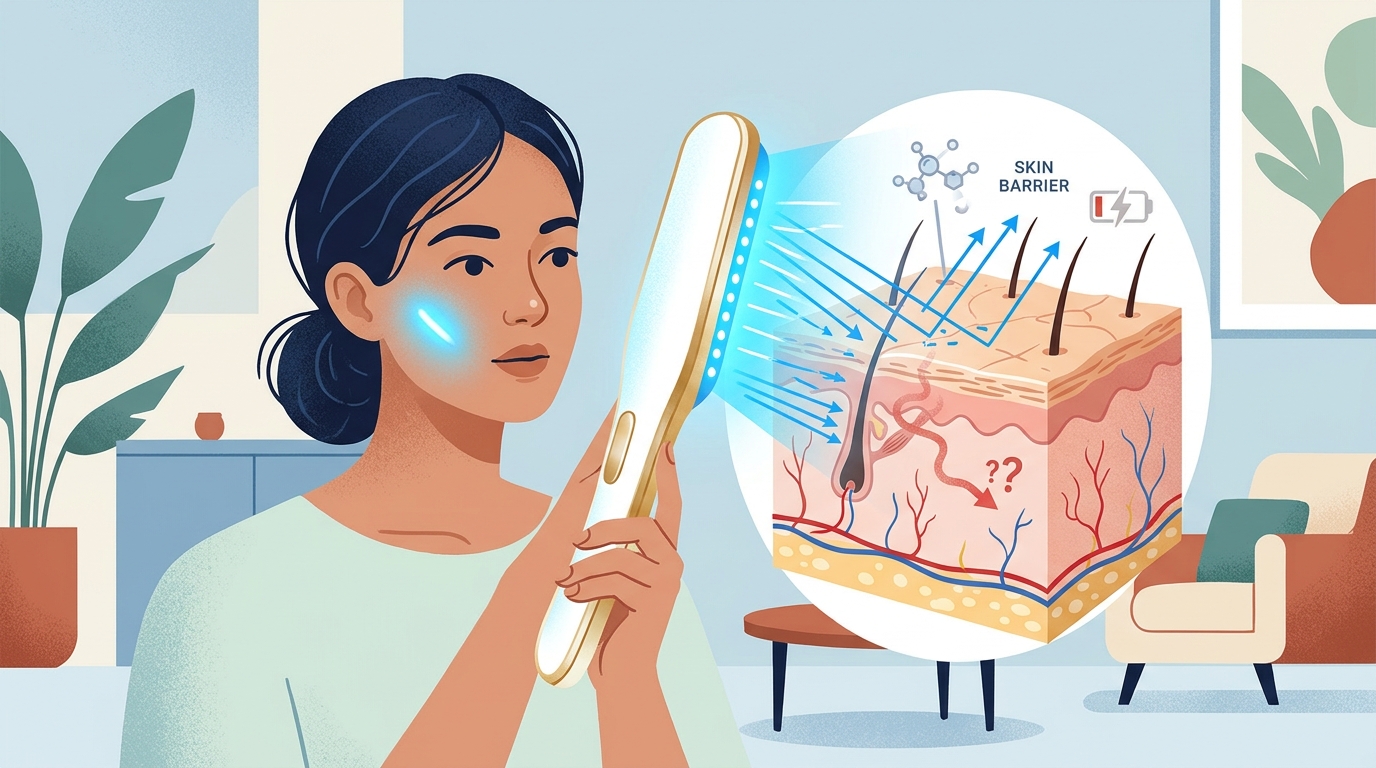
For most people troubleshooting disappointing results, the smartest first move is not purchasing another mask or extending every session. It is checking whether the existing device is being used correctly and whether its intended application actually matches the desired skin improvement.
Think of the process in three priorities: establish a consistent routine, verify the device's specifications and safety instructions, and evaluate progress using objective comparisons rather than daily impressions. If those fundamentals are already in place, recognize that home LED therapy has limitations and may not address every concern.
A thoughtful skincare routine does not need to be complicated or expensive. By correcting avoidable mistakes and knowing when a device is not the right solution, you can make more informed decisions, avoid unnecessary purchases, and give your skincare routine a realistic chance to deliver the benefits it is designed to provide.


Comments
Post a Comment