Are You Accidentally Undermining Your At-Home Skincare Results? Common Device Mistakes to Avoid
At-home skincare devices promise a convenient way to add targeted treatments to an existing routine. Yet even an expensive gadget can disappoint when the technique, timing, cleaning habits, or expectations are wrong. Many home skincare device mistakes are not dramatic errors. They are small, repeated habits that make a device less useful or leave skin feeling irritated instead of comfortable.
The solution is not necessarily a new device, a stronger setting, or a longer session. Often, the best first step is to simplify your routine and use the tool you already have more carefully. Understanding what different devices can and cannot do makes it easier to decide when to continue, when to adjust your technique, and when to stop.
- For irritation: Pause the device and review your skin's condition, treatment intensity, and product combination.
- For disappointing results: Check consistency, instructions, and realistic timelines before increasing intensity.
- For hygiene concerns: Clean reusable contact surfaces according to the manufacturer's directions.
- For safety: Never assume that a setting or treatment suitable for one device is appropriate for another.
- For better value: Track comfort and routine consistency instead of chasing a stronger sensation.
1. Using a Device Without Understanding Its Purpose
One of the easiest mistakes is treating every beauty gadget as if it performs the same job. A cleansing brush, LED light device, microcurrent tool, facial roller, and microneedling device have different mechanisms, operating instructions, and risk profiles. Advice that makes sense for one may be ineffective or inappropriate for another.
A facial roller, for example, is primarily a massage tool. It may temporarily make the face feel refreshed, but it should not be expected to produce the same effects as a device designed to deliver a specific form of energy. Similarly, a cleansing brush helps with physical cleansing but is not automatically more effective than gentle cleansing with your hands.
Before each new treatment, answer three questions:
- What is this device actually designed to do?
- What preparation, technique, and frequency does its manual specify?
- What results are realistic, and what claims would require stronger evidence?
If you cannot answer these questions, postpone the treatment until you can. Looking up the manufacturer's instructions is more useful than copying a routine from a short social media video. Online demonstrations may omit important details, including contraindications, treatment limits, and the exact model being used.
2. Assuming More Intensity Means Better Results
Increasing power, pressure, treatment duration, or frequency can feel like a shortcut when visible changes are slow. Unfortunately, more is not always better. Depending on the technology, excessive use can cause redness, dryness, tenderness, or other unwanted reactions without providing additional benefits.
Mechanical tools may create unnecessary friction when pressed too firmly against the skin. Electrical or light-based devices may have specific limits on exposure and frequency. Heat-producing tools can pose burn risks if used incorrectly. The consequences vary, so a universal rule such as using every device for a certain number of minutes would be misleading.
Use this decision rule: If your skin remains comfortable and the manual permits the current routine, maintain the recommended settings rather than increasing them simply because you want faster results. If irritation develops, stop and reassess instead of pushing through. If the device has no clear instructions or safety guidance, do not experiment with stronger settings to compensate.
Also, pay attention to the difference between a normal operating sensation and a warning sign. A gentle sensation described in the device instructions is not the same as burning, persistent stinging, pain, or increasing redness. Do not treat discomfort as evidence that a session is working.
3. Combining Too Many Treatments in One Routine
A crowded skincare routine can make it difficult to identify what is helping and what is causing trouble. For example, using a cleansing brush, applying a strong exfoliating product, and following with an intensive treatment in one session may increase irritation, particularly for people who already experience dryness or sensitivity.
Some skincare ingredients also deserve extra attention when paired with treatments that affect the skin barrier. Retinoids, exfoliating acids, and other potentially irritating products may not be suitable immediately before or after every device treatment. The right approach depends on the specific technology, product instructions, and individual skin condition.
This does not mean all combinations are harmful. A compatible device and skincare product may be intended to work together. The important distinction is whether the combination is supported by the manufacturer's guidance and appropriate for your skin.
A simpler way to organize your routine
- Start with the basic cleansing and moisturizing routine your skin already tolerates.
- Introduce one new device or treatment at a time.
- Follow the prescribed preparation and aftercare steps.
- Observe your skin before adding another new treatment or active ingredient.
If a reaction occurs, simplifying the routine helps narrow down possible triggers. It is much harder to identify the cause when several new products and devices are introduced together.
4. Skipping Cleaning and Storage Instructions
A beauty device touches your hands, bathroom surfaces, skincare products, and sometimes your face directly. Leaving residue on its contact surface or storing it while damp can create avoidable hygiene problems. Repeatedly using a dirty attachment may also transfer oil, makeup, and product buildup back onto the skin.
Cleaning does not mean using whichever disinfectant happens to be nearby. Alcohol, harsh cleaners, excessive water, and abrasive materials can damage certain surfaces or interfere with electrical components. A device that is not waterproof should never be submerged just because its treatment head needs cleaning.
Instead, build a short maintenance habit around the device's actual design:
- Check whether the entire unit or only the detachable head can be cleaned with water.
- Remove visible product residue after use, following the specified cleaning procedure.
- Allow components to dry as directed before storage.
- Keep the device in a clean, dry place rather than beside a wet sink or shower.
- Inspect cables, attachments, charging ports, and treatment surfaces for damage.
Never share a device or attachment that is intended for individual use, especially when it contacts broken skin. Replace worn or damaged parts when required. For a tool designed to penetrate skin, ordinary surface wiping is not a substitute for the specific infection-control and single-use requirements associated with that procedure.
5. Ignoring Skin Condition and Timing
A routine that feels comfortable one week may not be appropriate the next. Weather, dry indoor air, sun exposure, shaving, recently introduced products, and existing skin irritation can all influence how well a treatment is tolerated.
Using a device on skin that is already inflamed or damaged can make an existing problem worse. Active irritation, open wounds, infection, and unexplained rashes are reasons to avoid experimenting with treatments until the issue has been assessed appropriately. Certain devices also have restrictions relating to eye areas, pigmentation, implanted electronic devices, medications, or particular medical conditions.
These restrictions are not identical across all devices. A warning associated with a light-based hair-removal device, for example, should not automatically be applied to every facial roller. Equally, the absence of a warning in a promotional advertisement does not mean a treatment is suitable for everyone.
Make the decision based on your current skin, not your planned calendar. If your skin is calm and you meet the device's safety requirements, follow the normal schedule. If your skin is irritated, postpone the session. If you have a medical condition, use a photosensitizing medication, or are uncertain about a listed contraindication, consult an appropriate healthcare professional before proceeding.
6. Expecting Immediate or Permanent Changes
Beauty-device marketing can encourage the impression that a visible transformation should follow a few sessions. Realistic outcomes are often more modest and depend on the technology, the concern being addressed, the quality of the evidence, and the user's individual circumstances.
Massage tools may provide temporary changes in how the face feels or looks. A cleansing device may make a routine more convenient without being essential for healthy skin. Certain light-based treatments have evidence for particular uses, but their effectiveness depends on the device and intended application. Results from professional treatments cannot automatically be assumed to apply to home-use equipment.
It is equally important to distinguish temporary effects from lasting changes. A brief feeling of tightness, a temporary reduction in puffiness, or a smoother appearance after moisturizing does not necessarily demonstrate a durable change in skin structure.
Instead of judging a device after every session, establish a reasonable observation period based on its instructions. Keep the rest of your routine relatively stable and note whether the original concern improves, remains unchanged, or worsens. If the recommended use period passes without meaningful benefit, reassess whether the device is appropriate rather than automatically increasing its intensity.
There is also a legitimate exception to the idea that everyone needs a device routine: many people can maintain comfortable, healthy-looking skin with gentle cleansing, moisturizer, and sun protection alone. If a gadget adds expense, time, or irritation without a clear benefit, discontinuing it may be the most practical decision.
7. The Most Important Differences Between Common Device Types
Understanding a tool's basic function helps prevent technique errors. The following table summarizes common categories and the mistakes most worth avoiding. It is a general reference, not a replacement for the instructions supplied with a specific model.
The key takeaway is that there is no single ideal technique for every home skincare gadget. A gentle massage tool and a device that delivers energy or penetrates the skin have fundamentally different safety considerations. When in doubt, prioritize the device's specific instructions over generic beauty advice.
8. What to Do Now: A Practical Skincare Device Reset
If your current routine is not producing the results you expected, you do not need to overhaul everything at once. A short reset can help you identify the most likely problem and decide whether the device still deserves a place in your routine.
- ☐ Identify the goal. Write down the specific concern the device is intended to address.
- ☐ Read the instructions. Confirm the correct settings, treatment duration, frequency, and contraindications.
- ☐ Inspect the device. Check for residue, damaged surfaces, loose parts, or charging problems.
- ☐ Review the routine. Look for potentially irritating products or treatments being combined too closely.
- ☐ Check your skin. Do not use the device over irritated, injured, or infected skin.
- ☐ Set a realistic schedule. Use the device only as directed rather than adding extra sessions.
- ☐ Track changes. Note comfort, consistency, and the concern you are trying to address.
- ☐ Decide whether to continue. Reassess if the device causes repeated irritation or provides no meaningful benefit.
Prioritize the problem that matters most
If your skin is irritated, focus on stopping the suspected trigger and restoring a simple, well-tolerated routine. Adding a new serum or increasing the device setting is unlikely to be a sensible first move.
If your skin feels fine but results are limited, verify that the device is intended for your goal, that you are using it correctly, and that you have allowed a reasonable period for assessment. Not every device delivers a noticeable improvement, even when used properly.
If cleaning and maintenance are inconsistent, correct those habits before your next session. If the device is damaged or cannot be cleaned as instructed, stop using it until the problem is resolved.
If you are unsure whether the treatment is appropriate for you, do not test the limits of the device on your face. Seek qualified advice when a contraindication, medical condition, or persistent skin problem raises concerns.
Make tracking simple enough to maintain
A short record is often more useful than a complicated skincare spreadsheet. Note the date, the treatment used, any products applied around the session, and how your skin feels afterward. If you are tracking visible changes, compare observations under similar lighting and conditions rather than relying on memory alone.
Keep in mind that photos can be influenced by lighting, camera distance, makeup, hydration, and facial expression. They can help you notice patterns, but they are not a clinical measurement of skin health. Stop a treatment if your skin develops concerning symptoms instead of waiting for the tracking period to finish.
9. Safety Warnings You Should Not Ignore
Discontinue a device if you experience burning, significant pain, blistering, marked swelling, persistent or worsening redness, or unexpected skin injury. Do not repeat the treatment to see whether the same reaction happens again. Seek prompt medical advice for significant or persistent symptoms, and urgent care for severe reactions such as difficulty breathing or rapidly developing facial or throat swelling.
Some home beauty tools carry risks that cannot be managed simply by reducing pressure or shortening a session. Devices that puncture the skin can introduce infection and cause scarring or pigmentation changes. Light-based devices may require specific eye protection and may be unsuitable for certain skin tones, hair colors, medications, or medical circumstances, depending on the intended treatment. Electrical devices may also have restrictions for people with certain implanted devices or health conditions.
Read the contraindications before the first use, not after a problem develops. If the manual advises against use in a particular circumstance, do not assume that a lower setting makes it safe. Similarly, never bypass safety features, modify attachments, use incompatible power supplies, or apply a device to an area excluded by its instructions.
Pregnancy, breastfeeding, a history of skin disease, recent procedures, and medication use can raise device-specific questions. These circumstances do not create one universal rule for all beauty gadgets; they are reasons to check the actual product guidance and obtain professional advice when appropriate.
Finally, be cautious about advice that promises a guaranteed outcome or encourages you to ignore irritation. A device should fit into a safe routine, not require you to tolerate repeated discomfort or abandon sensible skincare practices.
10. Frequently Asked Questions
How often should I use an at-home skincare device?
Follow the schedule specified for your particular device. Recommended frequency varies with the technology, intended treatment, and individual product design. More frequent sessions are not automatically more effective. If irritation develops, stop and reassess rather than trying to maintain the schedule at all costs.
Can I use a skincare device every day?
Some tools may be designed for frequent use, while others require recovery time between sessions or have strict exposure limits. Daily use is appropriate only when the manufacturer's instructions allow it and your skin tolerates the treatment. Never apply one device's schedule to a different category of tool.
Should I apply serum before using a beauty device?
It depends on the device. Some microcurrent tools require a compatible conductive gel or another specified product, while other devices may require clean, dry skin. Certain ingredients can also increase irritation when combined with particular treatments. Check both the device instructions and the skincare product guidance before layering them.
Why does my skin look worse after using a device?
Possible explanations include excessive pressure, overuse, a reaction to a skincare product, an unsuitable treatment, or an underlying skin problem. Stop the device while you assess the situation. Avoid adding more active ingredients to counteract the reaction, and seek professional advice if symptoms are significant, persistent, or worsening.
Can I share my facial device with a family member?
Do not share a device or attachment unless the manufacturer explicitly permits shared use and provides suitable cleaning instructions. Tools that contact broken skin or penetrate the skin present particular hygiene concerns. A surface wipe may not be enough to make an item safe for another person.
Do expensive home skincare devices always work better?
No. Price alone does not establish effectiveness, suitability, or safety. A less complicated tool may be adequate for your goal, and some people do not need a device at all. Consider the evidence for the intended use, the quality of the instructions, the time commitment, and whether the treatment is appropriate for your skin.
How long should I wait before deciding whether a device works?
Use the timeframe and outcome expectations provided by the manufacturer, while recognizing that marketing claims may not reflect strong independent evidence. Evaluate the specific concern you hoped to address and keep other routine changes limited where practical. If there is no meaningful improvement after the recommended period, reassess the device instead of increasing its intensity.
Should I stop using a device if it causes mild redness?
Do not automatically assume redness is harmless or necessary. Its significance depends on the device, the treatment, the duration, and accompanying symptoms. Follow the product's guidance about expected reactions, and stop if redness is unusual, painful, persistent, or worsening. When uncertain, seek professional advice before using the device again.
11. Better Results Begin With Better Habits
Getting more from home skincare devices is less about maximizing every session and more about making the right decisions consistently. Start with the device's intended purpose, respect its safety limits, maintain clean equipment, and avoid combining treatments simply because they are available. These fundamentals are more useful than a complicated routine built around the promise of faster results.
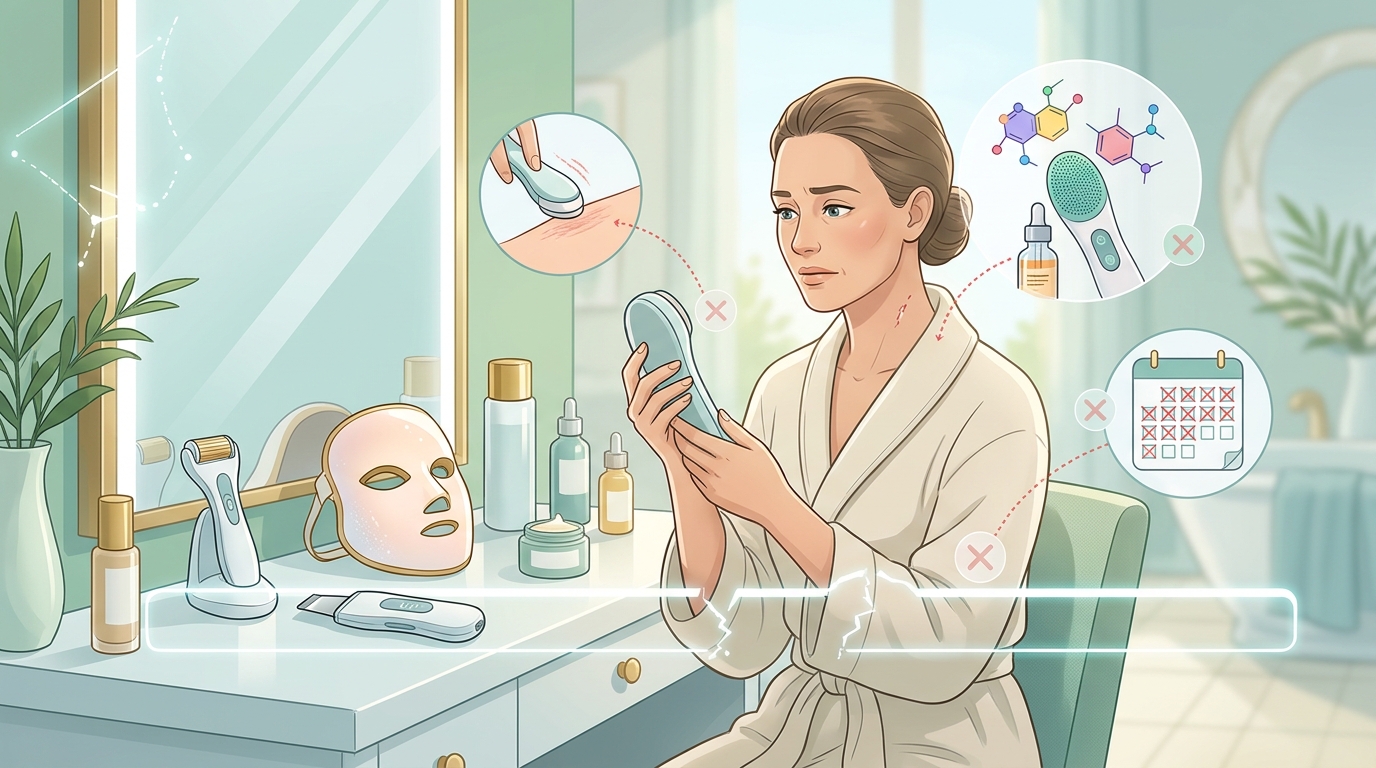
When something goes wrong, identify the problem before changing the treatment. Irritation calls for a pause and reassessment. Disappointing results call for a review of realistic expectations, correct technique, and whether the device suits your goal. Hygiene problems call for better maintenance, while uncertainty about contraindications calls for qualified guidance rather than experimentation.
It is also worth remembering that a beauty gadget is an optional tool, not a measure of how seriously you care for your skin. A straightforward routine that you can maintain comfortably may be more appropriate than several devices that consume time and introduce unnecessary irritation. The most useful investment is the one that supports your needs without creating new problems.
Ultimately, avoiding common home skincare device mistakes means knowing when to use a tool, when to adjust your habits, and when to leave the device aside. Give safety and consistency priority over intensity, judge outcomes realistically, and let your skin's condition guide your next step. That approach helps you make more informed use of the tools you already have while keeping your broader skincare routine practical and sustainable.


Comments
Post a Comment